Amyl vs Isopentyl vs Isobutyl: 3 Best Popper Guides
If you have ever stood in front of a poppers shelf and wondered why every bottle seems to carry a slightly different chemical name, you are not alone. Making an accurate comparison between amyl vs isopentyl vs isobutyl formulas is essential for your personal safety, as chemical purity directly impacts your physical health and overall consumer experience. Products are often labelled as solvent cleaners or room odorizers, but the active formula named on the bottle is usually one of three alkyl nitrites: amyl (pentyl) nitrite, isopentyl nitrite, or isobutyl nitrite. They sound almost identical, yet they behave differently in practice.
This comprehensive guide decodes those labels so you can tell what is inside the bottle, understand how “strength” really works, and choose the formula that fits your experience level when studying amyl vs isopentyl vs isobutyl options.
What an Alkyl Nitrite Actually Is and How to Tell Them Apart
At their most basic, poppers products are alkyl nitrite compounds—a family of liquid chemicals made to meet solvent, leather-cleaner, and room-odour applications. Because they are legally sold and marketed for those uses, the chemistry is what matters more than the branding on the front of the bottle.
The name on the label tells you which alkyl group the nitrite is built on. That alkyl group is the single biggest driver of the product’s character: how quickly a rush arrives, how intense it feels, and how long it lasts. Everything else—bottle size, marketing claims, accent colours—is secondary to that one detail. Analyzing amyl vs isopentyl vs isobutyl variations will help you appreciate these differences.
1. Amyl Nitrite: The Traditional Powerhouse Formula
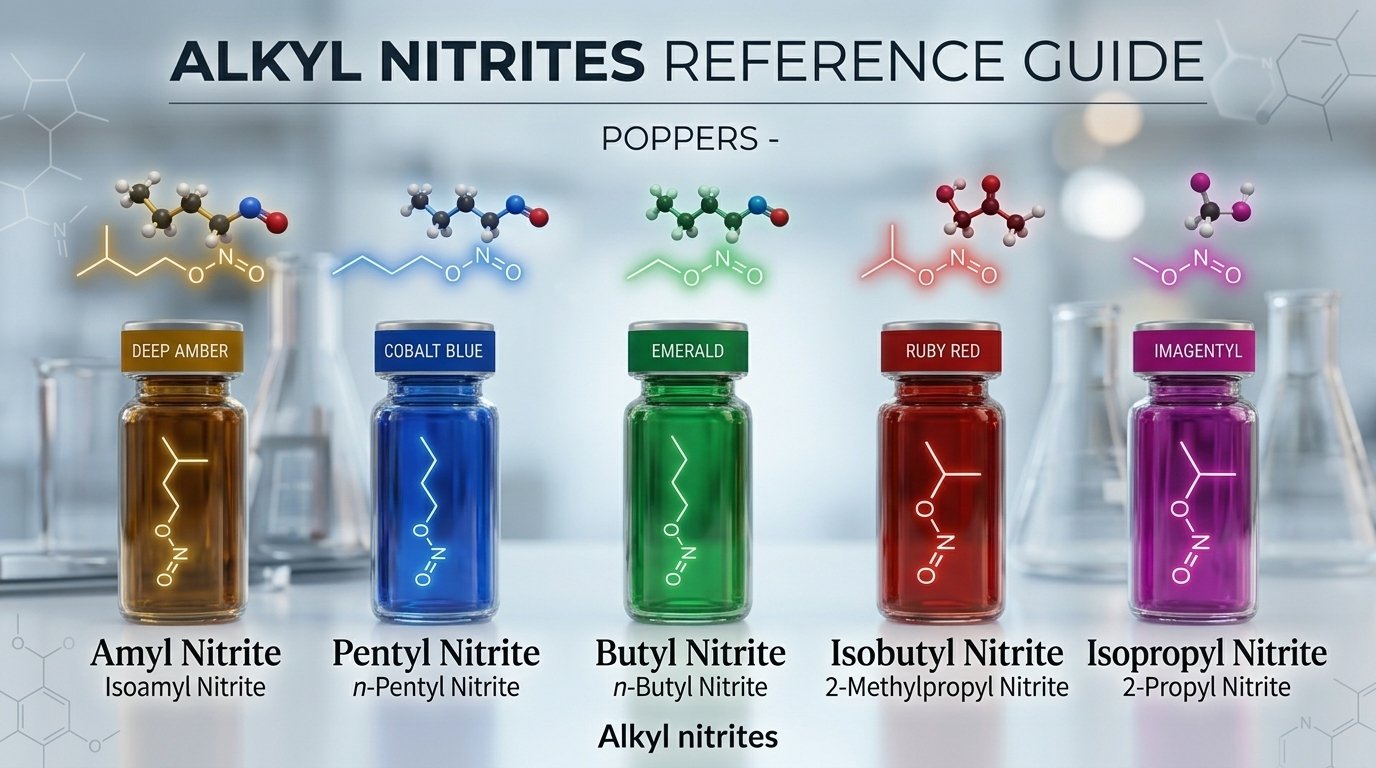
Amyl nitrite (often labeled as pentyl nitrite) is the traditional gold standard of the industry. Known for its historical significance and reliable consistency, it serves as a baseline comparison when viewing amyl vs isopentyl vs isobutyl structures.
- Onset and Duration: Amyl nitrite delivers a warm, smooth, and progressive rush. It does not slam into your system instantly; instead, it builds over several seconds and offers a longer-lasting plateau compared to other formulas.
- Physical Traits: It is highly valued because it provides a clean, intense experience with a very gentle recovery window. It is significantly less prone to causing sudden pressure headaches or heavy nasal irritation, provided it is stored and preserved correctly.
- Notable Examples: Classic bottles like IRON FIST Amyl 24ml and Jungle Juice Black Label 30ml utilize these high-grade formulations.
2. Isopentyl Nitrite: The Smooth Modern Alternative
Isopentyl nitrite is a closely related chemical structure that has gained massive traction in modern European manufacturing lines. When looking at amyl vs isopentyl vs isobutyl, isopentyl sits comfortably in the middle as a well-balanced alternative.
- Onset and Duration: It shares a similar smooth progression profile with amyl, building gradually rather than spiking immediately. The duration of the rush is sustained and stable.
- Physical Traits: This formula is excellent for maintaining a steady atmosphere without intense physical spikes. It evaporates smoothly and is frequently chosen by regular users who want consistency across multiple sessions without rapid quality decay.
- Verification Signal: Manufacturers often use dark amber glass bottles or opaque aluminum formats to keep this specific compound stable and safe from light exposure.
3. Isobutyl Nitrite: The Sharp and Hard-Hitting Blend
Isobutyl nitrite was traditionally popular in historical formulas due to its intense, fast-acting nature. In the context of amyl vs isopentyl vs isobutyl comparisons, isobutyl represents the sharpest curve.
- Onset and Duration: Isobutyl hit hard and fast. The rush arrives almost instantly upon evaporation, delivering a heavy front-end experience that peaks rapidly and fades just as fast.
- Physical Traits: While powerful, raw or unrefined isobutyl formulas are historically more volatile. They are the most common cause of the rapid, splitting headaches, heavy chest sensations, and strong chemical aftertastes often reported by buyers who interact with low-grade or counterfeit market listings.
- Caveat: Many modern premium brands have transitioned away from pure isobutyl toward pentyl or amyl bases to ensure a cleaner, safer experience for consumers.
Why Quality and Brand Authenticity Matter in the Philippines
The surge of unverified digital listings makes checking your chemical baseline critical. Counterfeit or bootleg formulas often copy international labels but fill the bottles with cheap industrial-grade solvents like ethyl chloride or crude acetone blends. These low-cost knockoffs bypass laboratory filtration, resulting in heavy chemical impurities that leave greasy, yellowish rings inside the glass neck or emit a sour odor resembling household bleach.
To avoid dangerous replicas, always ensure your supply comes from an established platform with a certified supply chain. For 100% genuine options and verified imports, make sure to browse the full catalog available at the official
Harry Poppers Store. For an official scientific look at these active chemical compounds, molecular structures, and historical safety records, you can also check the verified data on
Wikipedia to stay fully informed.
- Inhale volatile vapors only; never swallow or drink the liquid contents as it can be fatal.
- Never mix these aromatic solvents with erectile dysfunction medications (like Viagra or Cialis) or blood pressure treatments.
- Always use your formulas inside well-ventilated rooms and keep the liquid away from your skin, eyes, and lips.
- Store your bottles perfectly upright inside a cool, dark cabinet away from sunlight to protect internal pressure.
Medical Disclaimer: The information provided in this guide is for educational and general informational purposes only. Alkyl nitrites and aromatic solvents share characteristics with chemical compounds that carry potential health risks, including a severe drop in blood pressure, headaches, and nasal irritation. This content is not intended to be medical advice. Always consult with a healthcare professional regarding health concerns or before interacting with chemical substances.