
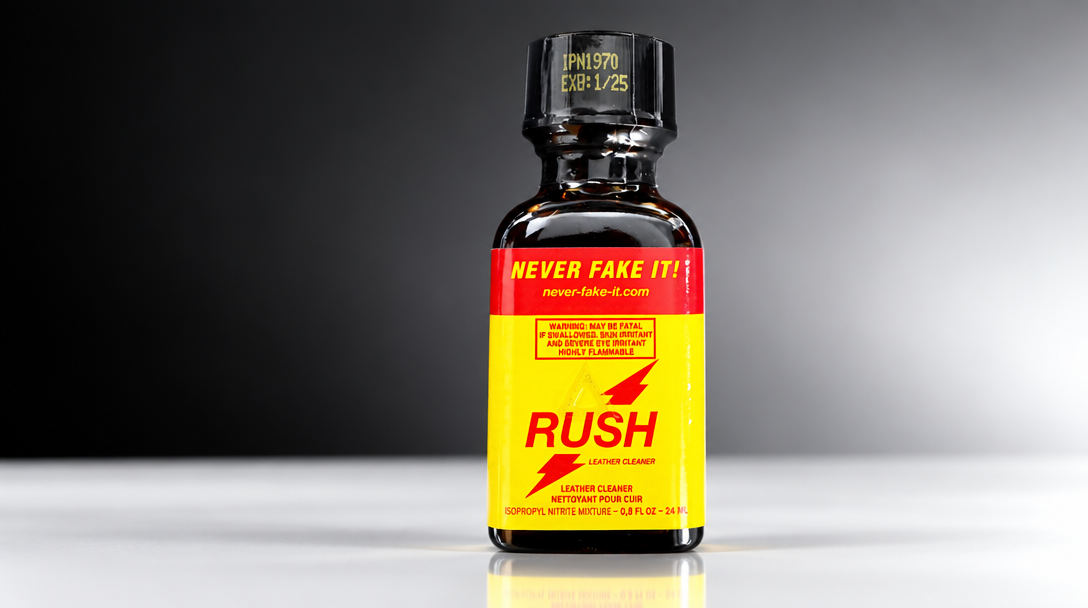
If you want to protect your personal safety and health, learning how to spot a fake rush popper bottle is the most important skill you can have today. Rush is the most recognized name worldwide, and that exact fame has made it the single most counterfeited formula in the Philippines. Walk into any local online marketplace, unvetted social media group, or grey-market reseller and you will find suspicious bottles priced far below the standard market rate.
For a responsible buyer who cares about liquid purity, the difference between authentic imports and a cheap imitation is not just cosmetic. It is the practical difference between a clean experience and severe physical discomfort. This comprehensive guide gives you a practical, repeatable way to audit your bottles before use. It explains why the safest path to authentic buying is choosing a retailer that stakes its reputation on genuine, traceable inventory.
Counterfeiters always follow local market demand, and no brand carries more recognition than the iconic yellow design. Because it is universally searched and trusted by both beginners and seasoned users, counterfeit manufacturers choose to borrow its logo instead of building their own.
Several unique market forces make the Philippines a prime target for these bad formulations:
– High local search demand for targeted terms online.
– Fragmented distribution networks operating through unregulated chat apps and profiles.
– Price anchoring that tricks buyers into thinking a dangerous chemical is just a good discount.
The real danger is that the word on the label refers to two completely different products: the authentic, traceable, European-sourced original, and an industrial-grade imitation that exists only to make quick money. Once you understand this market reality, learning how to spot a fake rush popper bottle becomes an essential protective skill.
Authentic European products are manufactured inside professional laboratories held to strict quality control standards. In these facilities, the active alkyl nitrite compounds are clearly specified and every production batch is completely traceable. Counterfeit operations, however, rarely bother with consumer safety. To cut their manufacturing costs, they substitute whatever industrial chemical is cheapest and most available at the time. This often means using low-grade isobutyl nitrite formulas cut with toxic ethyl chloride, dangerous acetone, or harsh chlorine residues.
The symptoms and complaints that follow an unvetted counterfeit bottle are remarkably consistent among buyers:
– Splitting pressure headaches that arrive quickly and linger for hours.
– Severe burning sensations and caustic chemical irritation inside the nasal passages.
– A foul, bleach-like or plasticky smell instead of the sweet aroma of a genuine blend.
– Thick, sour liquid or strange visible residue left inside the bottom of the glass.
– A rapid, unnatural tolerance where the bottle stops working after only a few uses.
Over time, repeated exposure to these industrial contaminants can cause lasting irritation. You are not actually saving money on a budget listing; you are risking your physical comfort with a dirty bottle that will never match the signature performance of a genuine European import.
You do not need specialized laboratory equipment to catch most fakes. The biggest weakness of any counterfeiter is that high-quality manufacturing is expensive. Because they want to save money, their shortcuts will always show up on the outside of the bottle. Run through these four major audit checks in order:
1. Inspect the Label Text: Modern authentic labels use sharp, high-resolution printing. Every letter is cleanly defined with even spacing. Fakes almost always show smudged, blurry, or doubled text edges from cheap digital printers. Always check for minor spelling errors or stretched logos.
2. Verify the Cap and Security Seal: The bottle closure is a physical safety feature. Authentic imports use strong child-proof or tamper-evident clicking caps. Counterfeits frequently use loose, generic screw-tops that turn too freely and leak liquid easily.
3. Confirm the Batch Tracking Code: True manufacturing traceability is your strongest authenticity signal. Genuine imports feature clean, embossed or printed batch information that connects directly to regulated supply chains.
4. Audit the Scent and Residue: Real alkyl nitrites have a distinctive chemical aroma. If your liquid smells like harsh bleach, nail polish remover, or leaves a thick residue on the glass, stop using it immediately.
The absolute safest way to avoid bad counterfeit formulas is to buy your products from a trusted source that filters out the grey market for you. To explore 100% genuine options, safe starter sizes, and verified imports, make sure to browse the complete catalog available at the official Harry Poppers StoreFor an official scientific review of these chemical structures, molecular traits, and international historical records, you can also check the verified data on wikipedia to stay fully informed.
By purchasing your inventory through an exclusive and vetted channel, you ensure that what is written on the outside label perfectly matches the liquid inside.
## The Bottom Line
Mastering how to spot a fake rush popper bottle is a simple matter of choosing quality over cheap prices. Spend a little more on a genuine import from a reputable source rather than gambling your comfort on an untraceable listing. Clean formulation is not just about getting a stronger effect; it is about protecting your peace of mind. Your experience should always be smooth, clean, and reliable.
**Medical Disclaimer:** *The information provided in this guide is for educational and general informational purposes only. Alkyl nitrites and aromatic solvents share characteristics with chemical compounds that carry potential health risks, including a severe drop in blood pressure, headaches, and nasal irritation. This content is not intended to be medical advice. Always consult with a healthcare professional regarding health concerns or before interacting with chemical substances.*